Comparative Strategies and the Elusiveness of Modernism

Agata and Elidor offer a series of very insightful reflections on my book, and I am grateful to both of them for their careful and generous reading of the manuscript. I would also like to thank Steve and Daria for including my book together with the excellent new books that have been discussed in this forum so far. Continue reading

Tulips and Concrete

Virág Molnár’s Building the State is compelling, and it aptly demonstrates why there has been such a high degree of academic interest in the built environment and material culture of the former socialist world. Like the best works on the subject, Molnár’s work is firmly situated in distinct locales (East Germany and Hungary, in this case) but it also takes seriously international dynamics that go beyond the Eastern bloc. Continue reading

Architects as State-Builders in Post-War Central Europe

For a surprisingly long time Central European cities have been perceived, both in the West and in the region itself, as gray, homogenous, and generally uninteresting. Predominantly associated with prefabricated housing and monumental social realist architecture, they have been often analyzed wholesale, without acknowledging their unique local aspects and the various, sometimes diametrically different, ways of implementing Soviet guidelines and policies. Continue reading

Second World Urbanity Conferences in 2014-2015

Dear Colleagues,

In 2014-2015, the Second World Urbanity project will feature three two-day conferences about the history of urban planning, architecture, and the everyday in socialist cities.

The first conference will be held at the Mortara Center for International Studies at Georgetown University in Washington, DC on April 11-12, 2014The date and location of this first meeting are now confirmed. It will focus on the broad, preliminary theme of “visions and foundations” in the history of socialist cities’ urban planning, architectural theories, and construction.

We anticipate holding the second conference at the Institute of Art History, Estonian Academy of Arts in Tallinn, October 10-12, 2014 (these are tentative dates awaiting final confirmation). This conference will focus on the themes of “circulation, translation, and transition.” We will examine how urban planning ideas and architectural concepts circulated across boundaries within the Second World, as well as across the Iron Curtain and into the global South and back again. The conference will also consider the fate of the socialist city across the 1989/1991 divide.

The third conference will be held at the Department of History of the Higher School of Economics in St. Petersburg in February 2015 (specific dates still to be determined). Its theme will be “consumption, representation, and the everyday” in the socialist city with a particular focus on how urban residents transformed socialist architecture and urban planning  into lived spaces, and how artists and writers participated in the construction and representation of the socialist city.

Each conference will feature four panels (with three pre-circulated papers on each), a keynote lecture, and a roundtable on teaching courses related to our project. This arrangement will make it easier for participants and audience members, spread out around the world as you are, to join at least one of the events. And we hope this format encourages the on-going conversations on our project that will produce an edited volume of selected papers.

The program and schedule for each conference are currently being finalized and will be announced shortly. Each conference will be open to the public.

Best,

Steve and Daria

Disenchantment in a Wunderkammer: A response to Viviana d’Auria and Elke Beyer

In one of his essays from the 1970s, Ryszard Kapuściński recalled: “When I came back from Africa, nobody asked me: ‘How are Tanzanians in Tanzania doing?’ but: ‘How are Russians in Tanzania doing?’ And instead of asking about Liberians in Liberia, the question was: ‘What about the Americans in Liberia?’”

The focus on Polish architects and planners in the two publications, generously put to debate by Steven Harris and Daria Bocharnikova, and perceptively reviewed by Viviana d’Auria and Elke Beyer, might suggest a similar, one sided view on architectural transfer, even if Poland’s role in the Cold War can be hardly compared to the two “superpowers.” Continue reading

Going South to Meet the West? The Blurred Boundaries of Polish (Post)modernism

With the two richly-illustrated exhibition catalogues on Polish architectural practices and their intertwinement with post-colonialism, (post)modernism, socialism, and globalization, Lukasz Stanek offers us a great deal to ponder. He does this with a reader-friendly lightness of style and wonderful documentation supported by attractive graphic design, though this does not keep his research from delving deeply into the implications that the export of intellectual labour and political ideology before and after 1989 represented. While PRL™ Export Architecture and Urbanism from Socialist Poland illustrates the significant contribution of Polish architects to framing modernist architecture as a globally effective solution to (urban) development, Postmodernism Is Almost All Right: Polish Architecture after Socialist Globalization reveals the impact of these experiences abroad on post-socialist Poland. Continue reading

Going South: Travelogues of Architectural Practice from Socialist Globalisation to Postmodernism

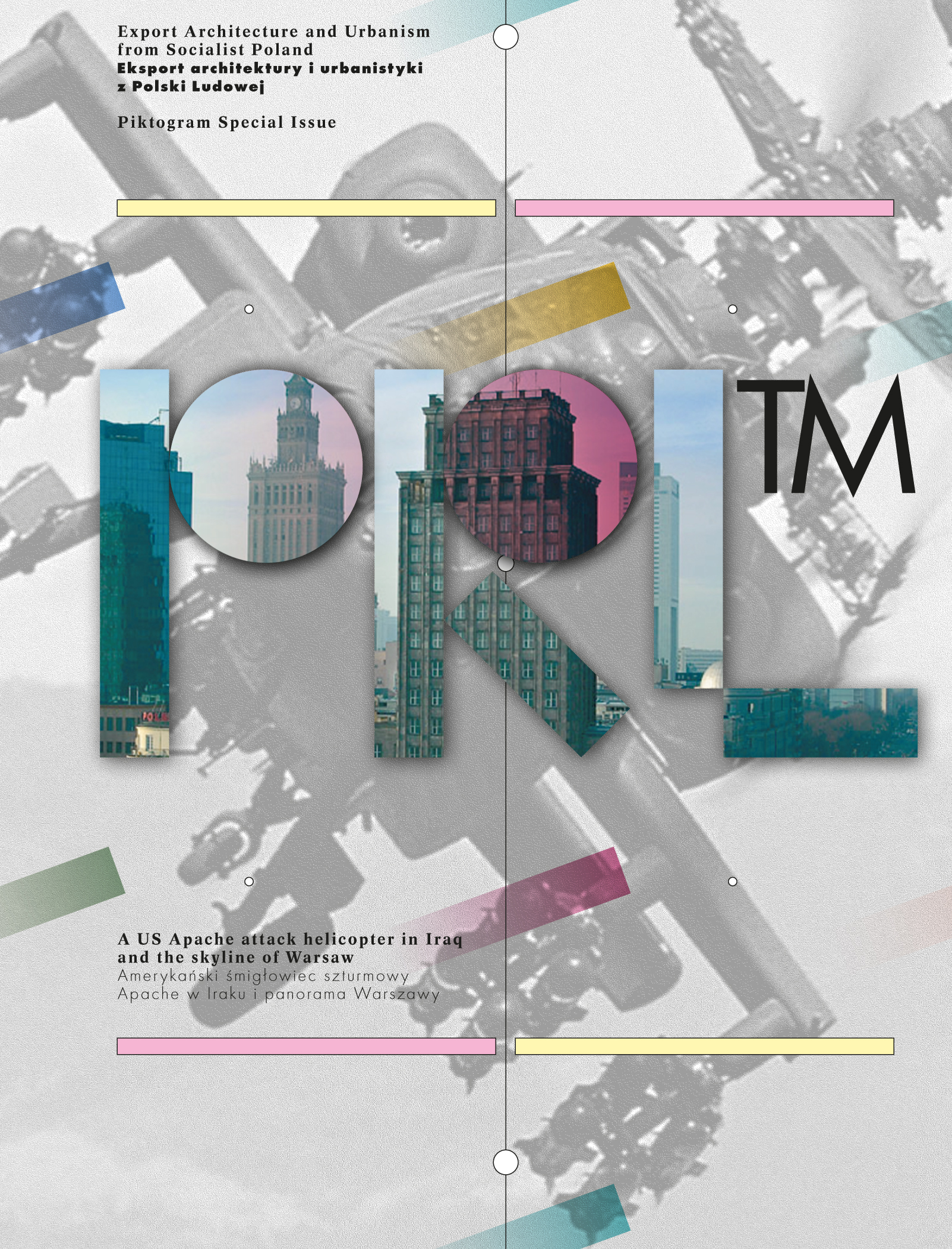
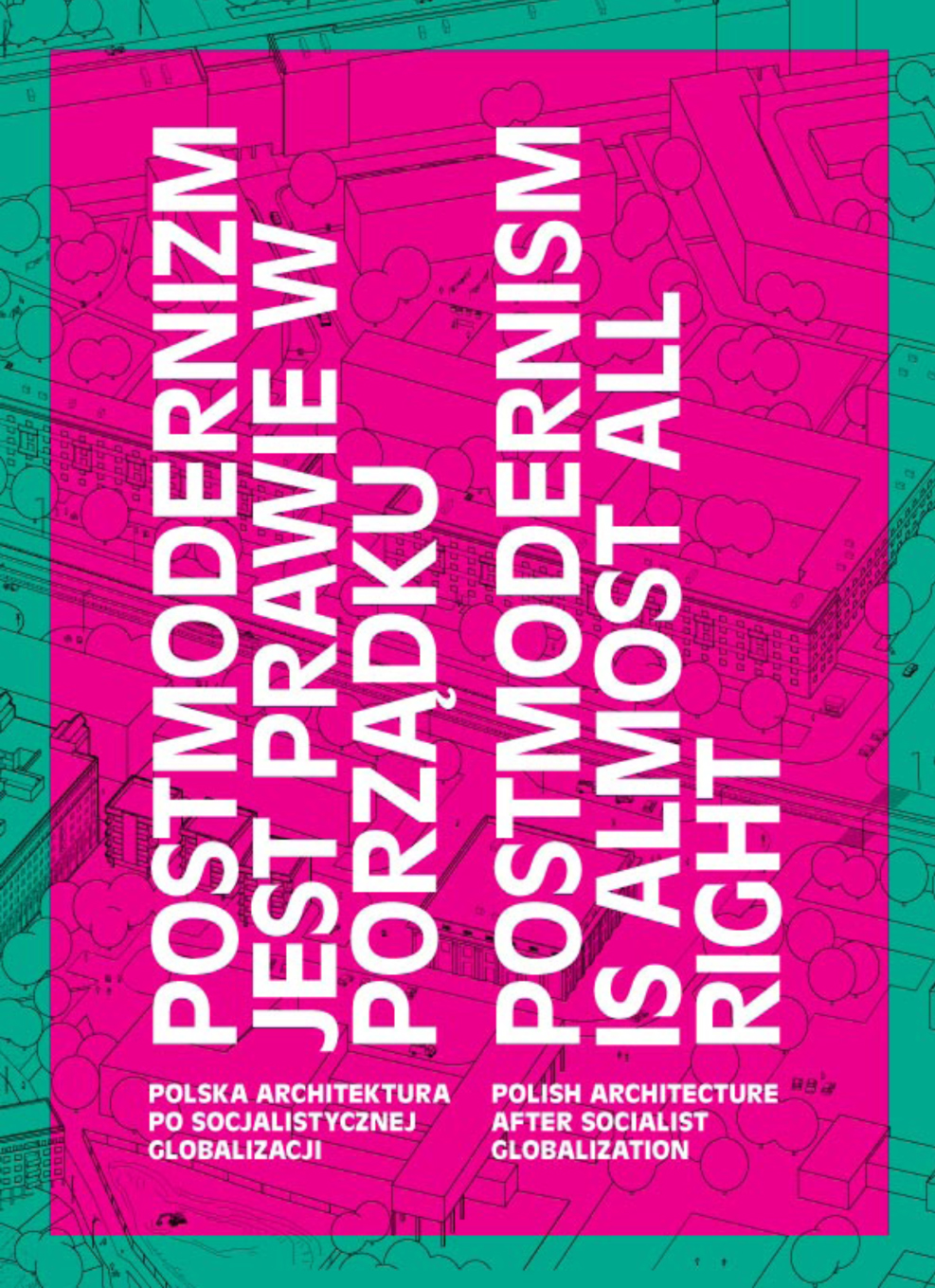
PRL™ by Łukasz Stanek claims to be “an exhibition on magazine’s pages” and its sequel Postmodernism Is Almost All Right would be equally justified to do so. In fact, the two publications document two exhibitions shown in Warsaw, in the Museum of Technology in fall 2010 and in the Museum of Modern Art in fall 2011, representing consecutive stages of a long-term research endeavour on post-colonial planning, global technology transfer and the Cold War, documented on the web platform www.south-of-eastwest.net. The long credit lists underscore the teamwork of several researchers, architects and designers in a collaborative production process. Texts are set in parallel in English and Polish. Continue reading

Exporting Socialism–Poland and the Global South

Our second book discussion features two recently published exhibition catalogs by Łukasz StanekPRL™. Export Architecture and Urbanism from Socialist Poland / Eksport architektury i urbanistyki z Polski Ludowej, Text: Łukasz Stanek / Design: Metahaven, special supplement to Piktogram 15, 2011. Postmodernism Is Almost All Right: Polish Architecture after Socialist Globalization / Postmodernizm jest prawie v porządku: Polska architektura po socjalistycznej globalizacji Text: Łukasz Stanek / Design: Jayme Yen, edited by Warsaw Museum of Modern Art / Fundacja bęc zmiana, 2012. PIKTOGRAM_coverIn these generously illustrated collections of architectural projects, diverse documents, and visual materials, the author investigates the export of socialist urbanism to the Global South between the 1960s and 1990s. He shows how the encounter between Polish architects, engineers, and urban planners with local experts and third parties involved in construction endeavors in the Middle East and Africa turned out to be truly transformative for all parties. In particular, Stanek traces how such encounters made architects reconsider and alter the architectural vocabulary of socialist modernism that is commonly associated with the architectural production of the Second World. PIAAR_cover_smallIn turn, their work reveals how traditional notions of the Cold War’s dynamics dominated by Washington and Moscow fails to capture the diverse relationships that existed between countries of the Second World and the Third World. And the motivations that drove Polish architects to seek out commissions in countries such as Ghana and Iraq are likewise complex and defy easy explanations. To begin our discussion, we have invited Elke Beyer and Viviana d’Auria to review the two exhibition catalogs. Readers are welcome to contribute comments to the posts featured below.